New Mexico

Overview
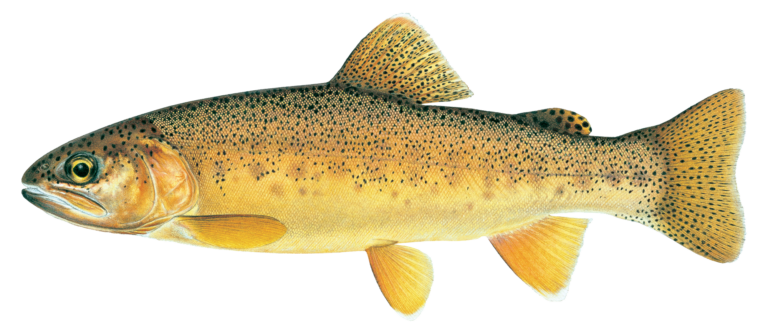
The Land of Enchantment is the home to some of the Southwest’s premier fisheries: the San Juan, the Upper Rio Grande, the Cimmaron, the Chama, and the Pecos rivers draw anglers from near and far. Two native species, the Rio Grande cutthroat, and the Gila trout, come in for special attention. We are partnering with diverse communities and stakeholders to protect and restore habitat for native and wild trout and make our rivers and watersheds more resilient to a changing climate. With agency partners, Indigenous and Hispanic land grant communities, and private landowners, we are restoring habitat and improving rivers and streams—work that creates family-wage jobs, produces cleaner water and recovers trout fisheries in New Mexico.
Fish We're Protecting

Threats & Opportunities
Drought, low flows, and degraded habitat threaten New Mexico’s wild and native trout. However, state and federal funding opens the door for habitat improvements. TU spearheaded advocacy that led to the Land of Enchantment Legacy Fund, the state’s first permanent funding source for New Mexico conservation and habitat restoration. The fund helps New Mexico restore natural fire regimes, foster healthier rivers, support regenerative agriculture, and improve outdoor recreation opportunities.


What We're Accomplishing
Restoring Native Rio Grande and Gila Cutthroat Trout Habitat
Our growing team in New Mexico and Colorado’s San Luis Valley has enabled us to invest more than $2 million in on-the-ground restoration in recent years to restore habitat for Gila and Rio Grande cutthroat trout, enhance barriers to nonnative fish and reconnect tributary streams to improve spawning and rearing habitat for native trout. We have been working in this region for decades, including in places like the Valle Vidal, where we are partnering with multiple organizations to establish a Rio Grande cutthroat trout stronghold in the Rio Costilla and Canadian River headwaters.
Partnering With the U.S. Forest Service
We are working on a wide variety of projects with the agency across the state. In Carson National Forest, for example, we are restoring habitat along 5.7 miles of the Rio San Antonio and Lagunitas Creek, where genetically pure Rio Grande cutthroat trout were recently discovered. Specifically, we are installing logjam structures designed to address channel incision and reconnect floodplains to improve drought and wildfire resilience.
At Frijoles Creek, we are again partnering with Carson National Forest and the Rocky Mountain Youth Conservation Corps to replace a failing invasive species barrier that protects Rio Grande cutthroat trout from nonnative predators.
We have also been working along Chihuahueños Creek in Santa Fe National Forest to restore 4 miles of habitat by installing 368 low-tech restoration structures that slow water, reconnect the stream to its floodplain, reduce water temperatures and create trout habitat. Collectively, these projects help hold water on the landscape longer, a critical outcome for trout in dry years.
Restoring Wilderness Areas Impacted by Wildfires
Impacted by the 2012 Whitewater-Baldy Fire, Little Turkey Creek is a Gila trout stream and tributary of Willow Creek where our Gila/Rio Grande Chapter has been bringing the stream back to life with funding from New Mexico’s River Stewardship Program and help from volunteers.
Ongoing restoration work aims to return Little Turkey Creek to its pre-fire condition through the installation of low-tech erosion control structures and planting of native vegetation, all done by hand in a wilderness setting.
To date, working alongside students and volunteers from New Mexico State University, Western New Mexico University and our local TU chapter, we have planted 2,637 willows along Little Turkey Creek in the Gila Wilderness to stabilize streambanks and restore lost habitat. So far, 83% of the willow plantings have taken hold, and those planted in previous years are now flourishing on their own, with new stem growth up to 2 feet long, a promising sign for the future. We have also installed approximately 100 rock structures to reduce sediment and erosion and slow streamflows, creating more favorable habitat for Gila trout.
Protecting Vital Watersheds and Fisheries
We have been working to secure permanent protections for Rio Grande cutthroat trout habitat in tributary streams along the Pecos River. According to the New Mexico Department of Game and Fish, the upper Pecos River is the state’s second most popular trout fishery, hosting more than 1 million angler days per year.
The watershed is currently the target of a multinational mining company seeking to develop its mineral resources. Together with the Stop Tererro Mine Coalition, we have organized broad community support to protect the Pecos, bringing together recreation, agriculture, water users, environmental organizations, local governments, and tribal and Pueblo stakeholders.
Investing in Local Communities
Restoring streams requires investing in the communities that depend on them for everything from drinking water to tourism and agriculture. Over the past decade, we have helped secure more than $3 million in funding to restore watersheds near Questa, Chama, Costilla and Jemez Springs, spurring economic development and improving coldwater habitat.
How You Can Help
Learn more about the ways you can help us recover New Mexico’s rivers, streams, and native trout
TAKE ACTIONStay informed about what we’re doing in New Mexico and across the Southwest.


New Mexico Conservation Team

Kevin Terry
Southwest Program Director
kevin.terry@tu.org
Southwest Program Director
kevin.terry@tu.org

Dan Roper
New Mexico State Director
dan.roper@tu.org
New Mexico State Director
dan.roper@tu.org

Toner Mitchell
New Mexico Rural Engagement Manager
toner.mitchell@tu.org
New Mexico Rural Engagement Manager
toner.mitchell@tu.org

Priority Waters

-
Upper Rio Grande Basin
Protecting and restoring the functionality of watersheds, streams, and riparian areas to benefit fish and wildlife, as well as New Mexico communities, has been at the heart of TU’s work in the Upper Rio Grande Basin for over a decade. Our work entails combining cutting-edge policy advocacy and community engagement with on-the-ground restoration designed to improve stream flows, restore ecological function, and provide for aquatic and riparian connectivity across the region. Our long-term goal is to rebuild healthy, resilient populations of Rio Grande cutthroat trout, a native trout species that now occupies a mere 11 percent of its historic habitat.
-
Headwaters of the Gila River
One of the longest rivers in the West, the Gila River is a 649-mile tributary of the Colorado River that provides habitat for two native trout, the Apache and Gila trout. Most of the remaining high-quality habitat for Gila trout can be found in the headwater streams of the Gila River watershed in southwest New Mexico. This region offers promising opportunities for native trout conservation in the years ahead through a combination of on-the-ground project work, policy advocacy, and community engagement, with benefits extending beyond Gila trout to entire watersheds and native species in the greater Gila ecosystem.
Stories