Colorado

Overview
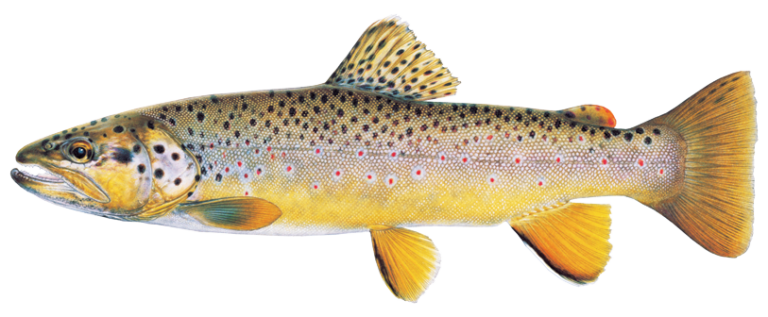
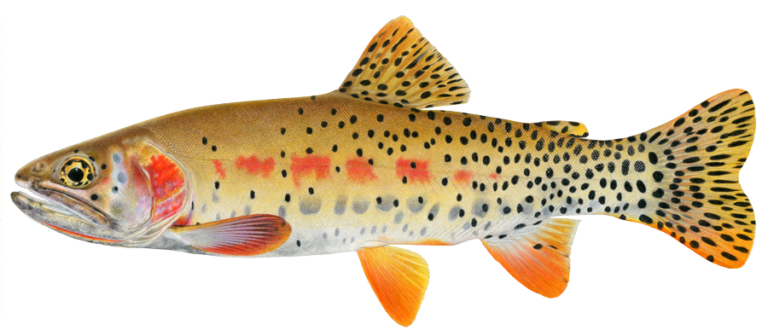
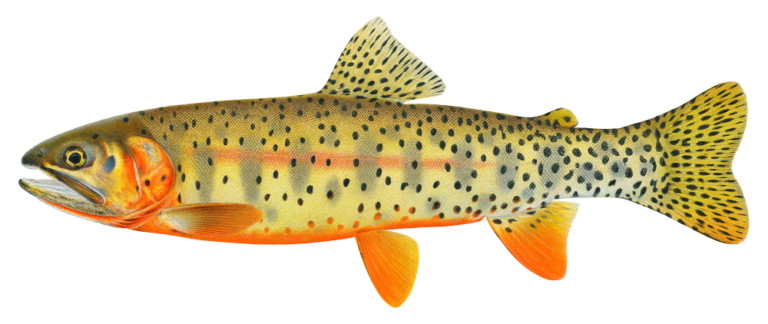
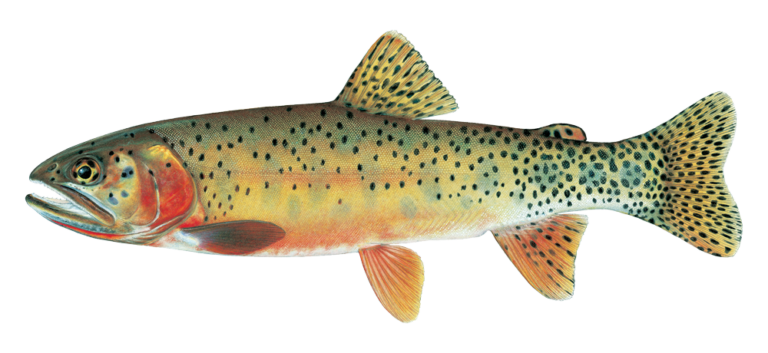
Colorado is the headwaters state of the American West, with major river systems originating in the high mountains. One of America’s most popular trout fishing destinations, the state boasts more than 66 million acres of public lands, a host of iconic rivers, and three species of native trout: the Greenback cutthroat, the Rio Grande cutthroat, and the Colorado River cutthroat, including the blue, green and San Juan lineages of this important fish. TU’s Priority Waters include to name a few, the Yampa and the Roaring Fork, the Gunnison and the San Juan, the Animas, and the South Platte. All of them support robust populations of wild trout. With tens of thousands of members and supporters in Colorado who contribute more than 44,000 volunteer hours annually to restoration, education, and other local conservation projects, we are restoring and reconnecting rivers, cleaning up abandoned mines, working with farmers and ranchers to keep more water in streams, advancing important water policies, building coalitions, and serving as trusted local experts in the effort to combat historic drought and overuse of the lifeblood of the West, the Colorado River.
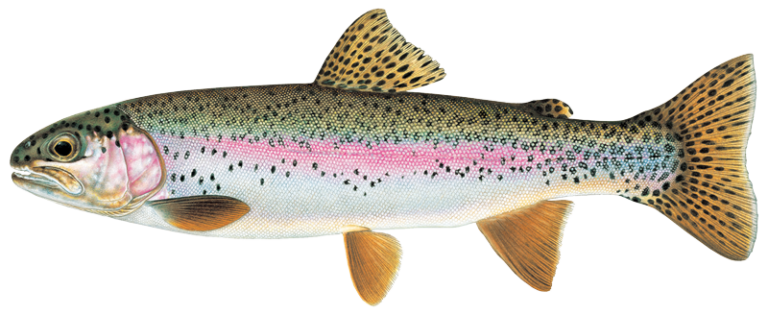
Fish We're Protecting
Threats & Opportunities
TU is ramping up the number of projects we have across the entire region to meet the challenges posed by the devastating, historic drought along the entire Colorado River Basin.




What We're Accomplishing
Across Colorado, we have a number of projects bettering our Priority Waters. These are just a few of the examples.
Making the Colorado River Basin More Resilient to Drought and Wildfire:
TU has completed an enormous amount of project work and in all the major tributaries to the Colorado River. These tributaries include the Yampa River, Fraser River, Upper Colorado River, Blue and the Gunnison River. Many of these project projects have involved partnerships with federal agencies like the U.S. Forest Service, Bureau of Land Management (BLM), and the Natural Resources Conservation Service (NRCS) to repair and protect degraded watersheds on private and public land.
In 2025, for example, TU completed a major restoration project with the BLM on the Fraser River near the town of Granby to restore 2500 feet of wide and shallow channel void of structure. This segment frequently sees low flows due to upstream diversions and the addition of wood, rock, and channel form will provide critical refuge for trout.
TU is working with the U.S. Forest Service to work in the headwaters to the Yampa River including projects on headwater streams like Whiskey Creek, Lost Dog Creek, and Milk Creek. These projects have used a variety of methods protect isolated populations of native Colorado River Cutthroat.
Tributaries to the middle Colorado near Eagle, Vail, Glenwood and the Roaring Fork Valley have seen an influx of funding and project work as a result of TU’s staff presence in that area. Barrier removals on Elk Creek have reconnected 7.5 miles of that tributary, and restoration of .5 mile of Gore Creek in the town of Vail planned for 2026 construction.
TU also brought together local partners to complete a Wildfire Hazard and Geo-fluvial Assessment to identify and prioritize locations in the upper Gunnison to focus restoration efforts and mitigate the risk of and impacts from of wildfires. This assessment combined with TU’s presence in the upper Taylor River and upper East River has led to restoration opportunities on public and private lands.
The NRCS, the National Fish and Wildlife Foundation, and the Colorado Water Conservation Board have also been major partners on the headwaters of the Gunnison River. Funding from, and coordination with these partners lead to restoring 4.5 miles in the Tomichi Watershed and reconnecting 8 miles of Tomichi Creek near the confluence with the Gunnison River.
Reconnecting the Colorado River:
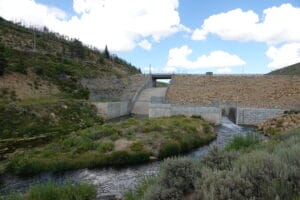
Championed for years by TU, the $33 million Colorado River Headwaters Connectivity Channel project built a natural stream channel around the Windy Gap Reservoir to reconnect the Colorado River, reduce the dam’s impacts on the river’s aquatic species and habitat for dozens of miles, and create a mile of publicly accessible Gold Medal trout water for anglers.
Restoring National Forests Impacted by Wildfires:
In August of 2023, TU began a partnership with the Arapaho and Roosevelt National Forests to support post-fire watershed and infrastructure restoration following the catastrophic 2020 Cameron Peak, East Troublesome, and Williams Fork Fires. Per the agreement with the U.S. Forest Service, TU will distribute $10 million over eight years to impacted infrastructure (roads, culverts, and bridges) and degraded stream and wetland habitats. Through this agreement, we are restoring healthy riverscapes, hastening the recovery of burned landscapes, and making wildfires less likely in the future. Construction of projects will begin in 2026.
Supporting the recovery of the Greenback Cutthroat Trout:
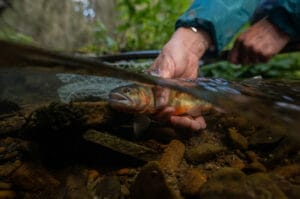
In the Cache la Poudre Headwaters, we are launching Colorado’s largest-ever restoration effort for native trout in partnership with the U.S. Forest Service, Rocky Mountain National Park, the U.S. Fish & Wildlife Service, Colorado Parks and Wildlife, and Colorado State University. This multi-year project is reintroducing Greenback cutthroat trout to nearly 40 miles of connected streams and multiple lakes, including Long Draw Reservoir, creating a new stronghold for Colorado’s state fish. After more than a decade of intensive efforts by TU, the state, and partners to rescue the Greenback cutthroat trout from the brink of extinction, the state fish is now naturally reproducing in the South Platte River drainage.
Cleaning up abandoned mines across Colorado:
The Environmental Protection Agency estimates that 40 percent of Western headwaters, which supply drinking water and provide critical habitat for trout, are degraded by acid mine drainage. TU successfully led the federal legislative push to provide “Good Samaritans” with the liability protections to continue cleaning up abandoned mines around the country.
This Steiner Project, for example, has been ongoing for several years and began when TU originally applied for funding from the Natural Resource Damage (NRD) program of Colorado Department of Public Health and Environment to improve aquatic resources injured by past mining associated with the Leadville Superfund site. This stretch of the East Fork of the Arkansas River represents a critical connection to the upstream watershed from its confluence with East Tennessee Creek. TU partnered with Land and Water Services Inc. with the goal of enhancing biodiversity and sustainability in agriculture, aquaculture, fisheries and forestry. Biodiversity and trout habitat has been improved by this project not only by expanding channel length to 2,000 feet, but by constructing a 1,000 foot wetland in the location of the former channel. This wetland will establish an important habitat for terrestrial and avian species adjacent to the new channel rehabilitation.
TU also worked with the U.S. Forest Service on the Forest Hill Mine Reclamation Project in the headwaters to the Taylor River, tributary to the Gunnison River. TU installed 2,500 plants in the ground, removed mine tailings from 10.5 acres and land, protected .25 miles of stream, and restored 2 acres of wetlands as part of this effort. 600 cubic yards of mine waste were also sent into repository because of these efforts, bettering water quality downstream.
Working with Ranchers to Make Irrigation More Efficient:
Born on the Conejos River in 2014, TU’s Winter Flow Program is designed to restore stream flows by establishing a restoration and ecosystem-based marketplace for businesses seeking to offset their water impacts. This program gives TU the financial ability to coordinate the program and to incentivize and provide cost-share with San Luis Valley water partners to adaptively manage water for multiple uses, including restoring stream flows and aquatic habitat.
In 2025-2026, the Winter Flow Program delivered 2,529 acre-feet of water out of three on-channel reservoirs. The water provided by the program’s water leases can extend flows some 255 miles, with some deliveries making an impact beyond the Colorado-New Mexico state line to provide in-stream benefits for trout and coldwater fisheries for over 100 miles in New Mexico, including the Wild and Scenic section of the Rio Grande Del Norte National Monument.
Additionally, TU founded the Farms to Fish program with the Conejos Water Conservancy and Colorado Parks and Wildlife in 2025 on the Conejos River during the irrigation season. This voluntary program provides a coordinated way for farmers to time deliveries of stored irrigation water to benefit the Conejos River during critical time periods when natural flows below Platoro Reservoir are less than 5 cubic feet per second (CFS) and occasionally completely dry up. The 2025 pilot year was an astounding success with 32 farmers partnering with TU and CPW to provide over 2,600 acre-feet of water in August of 2025.
How You Can Help
Help us care for and recover Colorado’s Priority Waters
VOLUNTEERStay up to date about what we’re doing to protect and restore Colorado’s rivers and native trout.


Colorado Conservation Team
Drew Peternell
Colorado State Director
drew.peternell@tu.org
Colorado State Director
drew.peternell@tu.org
David Nickum
Executive Director, Colorado Trout Unlimited
david.nickum@tu.org
Executive Director, Colorado Trout Unlimited
david.nickum@tu.org
Priority Waters
-
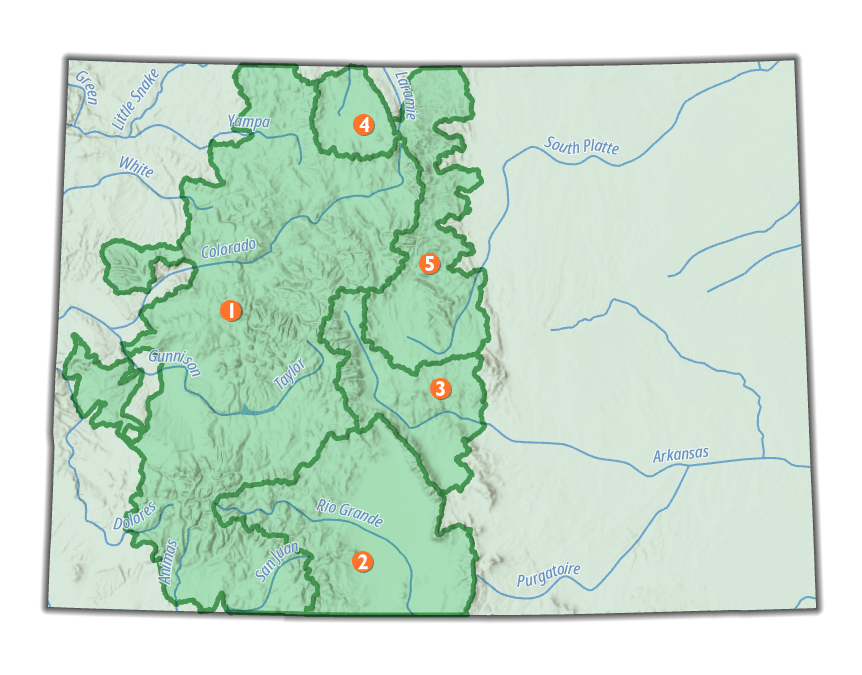
Colorado River Basin
Already facing historic drought and overuse, the Colorado is one of America’s iconic waterways and provides drinking water for 40 million people across seven states and 30 Tribal Nations.
-
Upper Rio Grande Basin
With more than two decades of experience working in the Rio Grande region, TU has formed multiple partnerships to protect and restore the watershed’s most critical landscapes and coldwater ecosystems and recover Rio Grande cutthroat trout. We are reinforcing the stewardship practices that have served the region’s rural communities for untold generations.
-
Arkansas River Basin
With its headwaters in the Rocky Mountains near Leadville, the Arkansas River stretches nearly 1,500 miles to the Mississippi River. From Leadville to Canon City, the Arkansas River offers nearly 80 miles of public access and boasts robust populations of wild brown trout and rainbows. In 2014, the Colorado Parks and Wildlife Commission declared 102 miles of the river as Gold Medal water, the longest stretch in the state. Boasting a strong brown trout population, the Arkansas River is extremely popular with fly fishermen.
-
North Platte River Basin
The headwaters of the North Platte begin flowing in North Park near the Colorado-Wyoming border. An underrated fishing area in the state, a 4.5-mile stretch of river near Northgate Canyon holds Gold Medal quality fishing with wild trout.
-
South Platte River Basin
With some of the best fishing areas of the state—the Dream Stream, Elevenmile Canyon, Cheesman Canyon, Deckers, Waterton Canyon, and other locations—the South Platte offers notable brown and rainbow trout year-round.
Stories